
People and bluebells © Tom Marshall
Nature for Wellbeing
Our vision
We believe that everyone deserves to live in a healthy, wildlife-rich natural world and experience the joy of wildlife every day: for the wellbeing of people and wildlife.
Why does this matter?
More and more people are living their lives indoors. We do not get to spend enough time in nature because often, there is nowhere nearby that is easily accessible. Those that have the least access to nature also have the worst levels of physical health and mental wellbeing.
Seeing birds near our homes, walking through green spaces filled with wild flowers and along rivers that are clean and clear reduces stress, fatigue, anxiety and depression.
Decision-makers are not making the link between nature’s recovery and our health, wellbeing & prosperity.
The Wildlife Trusts offer a different way of living. One which leads to happier, healthier lives and thriving wildlife.
Those that have the least access to nature also have the worst levels of physical health and mental wellbeing


Volunteer with us


What we're doing
We want to make socialising, volunteering, exercise and play in wildlife-rich natural places central to everyone’s daily life.
- We have wonderful places where you can feel the benefits of nature first hand. Our nature reserves are also places where you can take gentle exercise without knowing it.
- We continue to build the evidence that contact with wildlife is good for human health
Volunteering at the reserve helps me keep fit and meet new people and it’s also great to see so much wildlife
95% of Wildlife Trust volunteers with low wellbeing reported an improvement in 6 weeks, which continued over the following 6 weeksUniversity of Essex
Turning lives around with Green Prescribing
Daily contact with nature is linked to better health, reduced levels of chronic stress, reductions in obesity and improved concentration.
Engaging with the natural environment is also a great leveller. The Wildlife Trusts are rooted in their local communities and neighbourhoods, so we can help more people access local nature spots, reaching out to the full breadth of the people in the communities where we work.
We work in partnership with health and social care organisations, to increase their reach and better help the people they work with.
Nature for wellbeing projects
Projects that improve people’s wellbeing through bringing them closer to nature, or enabling them to take action for wildlife, have long been at the heart of our work at Montgomeryshire Wildlife Trust. Some of these initiatives have included:
Open Newtown
This local community land trust and social enterprise looks after 30 hectares of open space mainly either side of the River Severn – around 30% of Newtown. The Trust has worked with Open Newtown, contractors and members of the local community to make the town’s parks and green spaces safe havens for both wildlife and people, through sympathetic management and events
Art Oasis
Between 2017 and 2019, this project used arts intervention to promote caring and socially responsible behaviours to keep our green spaces safe, accessible and inspiring for all to enjoy. Art Action Days provided opportunities for young people aged 13-24 to get involved in developing exciting new artworks and interpretation to bring them closer to nature through the arts.
Learn and Build – Working Together for Nature
In 2024/25 the Trust partnered with Llanfyllin Shed to work with local community groups, such as Berriew Brownies and Camp Plas, to engage people in learning about nature by building wildlife homes - a mixture of bird, bat, insect and hedgehog boxes. Local people of all ages learnt about nature and around 150 wildlife homes were created, many of which were taken home by participants to install in their own gardens, creating even more space for wildlife in Montgomeryshire.
Gungrog Community Wildlife Garden
Thanks to a partnership with Barcud housing association, in 2023/24 we transformed a piece of land at a Welshpool housing development, Clos Gungrog on Gallowstree Bank, into a wonderful wildlife garden for residents to enjoy and care for. Created from rubble and concrete, Gungrog Community Wildlife Garden boasts low-maintenance raised beds, a herb garden, a young orchard, ponds and a picnic area overlooking the Montgomery Canal, along with interpretation signage about the features and how they benefit people and wildlife.
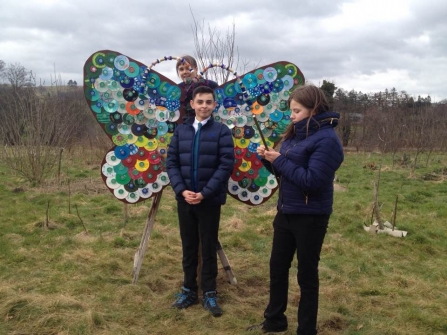
Art Oasis Llogy butterfly sculpture © MWT
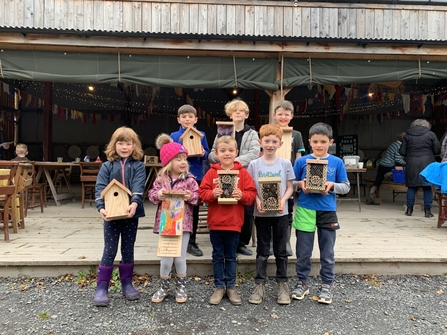
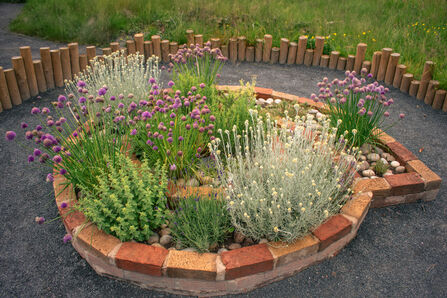
Photo: © Andrew Edwards
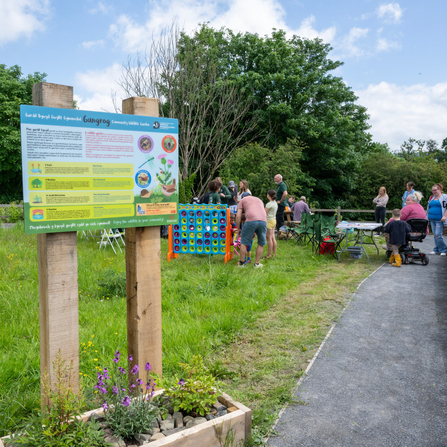
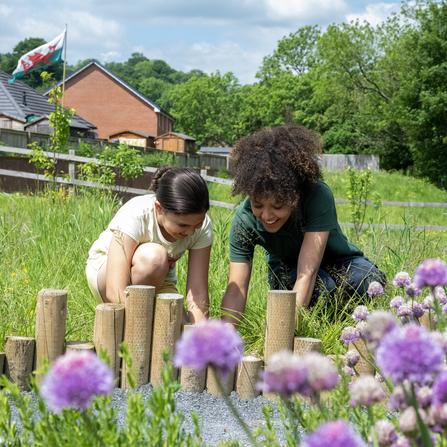
Photo: © David G Stevens
Further reading
Want to delve a little deeper?
From 2015-17 the School of Biological Sciences at the University of Essex carried out research on behalf of The Wildlife Trusts, to:
Study the mental wellbeing of volunteers on Wildlife Trust projects.
Collect information from projects across The Wildlife Trusts to evaluate their impact on people’s health and wellbeing.
Review the scientific literature, to investigate whether nature-rich environments had any specific impacts on people’s health and wellbeing.
The findings are particularly important for people who live with a mental health condition. The research showed that nature volunteering had the most significant impact on those with low levels of mental wellbeing at the start of the project. Download and read these reports below.